COLLIDER PROJECT
THE STORY BEHIND
Songwriter. Musician. Producer.
Music started at home.
Christian’s Dad, Kev, taught him his first guitar chords. Kev wasn’t really a guitarist — he simply loved entertaining people. At a party, he was the sort of person who would pick up a guitar and start singing… and do it well!
Once Christian had learned more chords than his Dad, Kev decided to put the guitar down and promote his son to personal accompanist — which also gave Christian some of his earliest insight into how much vocal harmonies can add to a song.
The education quickly became less conventional.
At thirteen, Kev found Christian a job washing dishes in a Greek restaurant. But when the restaurant’s bouzouki player was entertaining customers, Christian would be called out to accompany him on guitar while people danced — sometimes until three in the morning, which was perhaps a little late for a school night!

Music had already made an impression from the other side of the stage as well.
Christian was eleven when he went to his first concert, to see Hazel O’Connor. Being too small to see properly, he was picked up and placed at the side of the stage. When Hazel came out, she spotted him and laughed, “Oh, he’s a little one!”
Christian remembers watching her brother Neil playing a yellow Telecaster and having a very simple thought:
Watching Neil O’Connor playing a yellow Telecaster, Christian remembers thinking: “I want one of those. And I want to do what he’s doing.”
It didn’t take long.
By secondary school Christian had formed his first band, playing punkesque songs — including some originals — in the school hall. At fourteen he was in Frontline, writing songs and performing around Bath. Two of his bandmates from that period, Brian Hastie and Louis Jones, remain actively involved in the music scene today.
When Frontline disbanded, Christian had been through a short but prolific period of songwriting with the band and felt he was only at the beginning of discovering what he could create.
Getting a four-track changed what was possible.
For the first time, he could properly experiment with ideas — recording one part, adding another, changing arrangements and gradually turning songs into finished recordings that other people could actually hear.
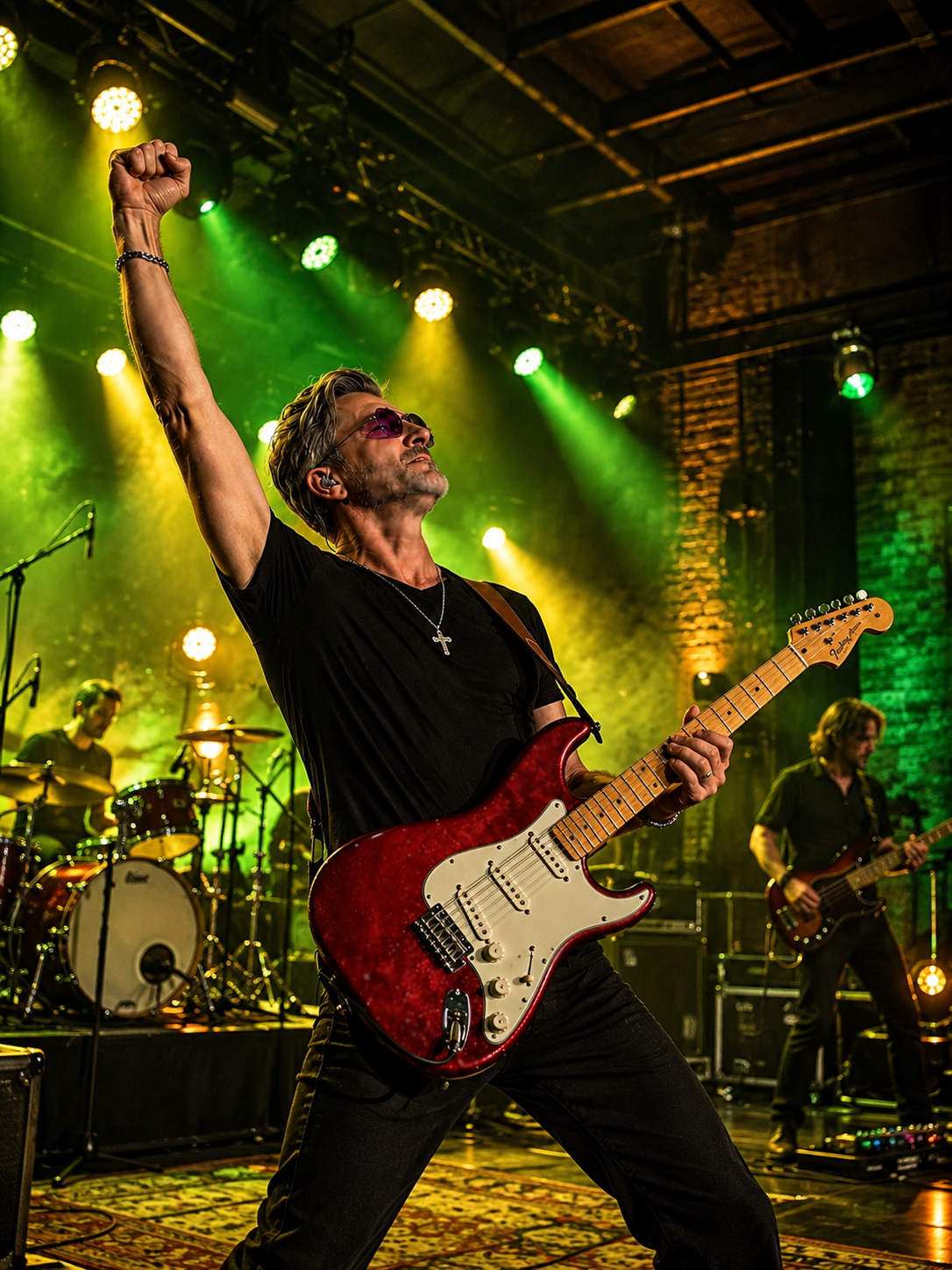
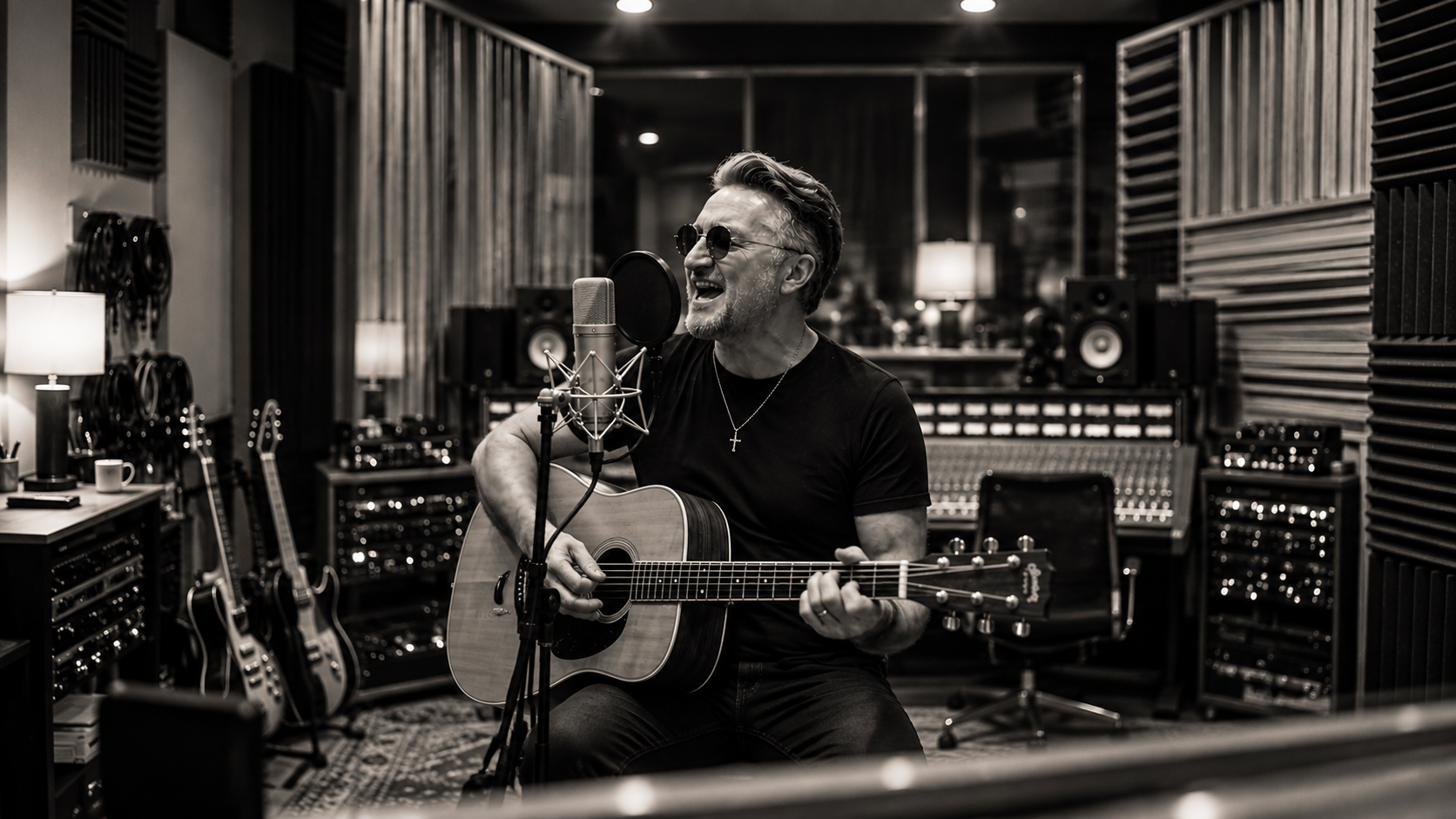

He wasn’t simply writing songs and waiting for better technology to arrive. He was already setting out to make albums with whatever technology was available.
If he was going to make those records himself, guitar wasn’t enough. So he set about seriously learning the other instruments he would need.
Between 1987 and 1990, Christian recorded nine albums at home using his four-track.
The technology was primitive compared with what would become possible decades later, but the fundamental idea behind Collider Project was already there: write the songs, experiment with them, arrange them, then play and sing whatever parts were needed to turn those ideas into records.
Some of those early songs — or later versions of them — would eventually find their way into Collider Project.
Years of songwriting, bands, recording and playing live followed. Technology changed dramatically, and Christian continued learning how to use it. Recording became arranging, engineering and mixing. Eventually mastering became part of the process as well.
By around 2022, the tools and experience had reached the point where Christian could make the records he wanted to make, from beginning to end.
That became the Collider Project.
Today Christian writes the songs, sings the lead and backing vocals and plays the guitars, bass, keyboards, piano, drums and percussion. He programs where the music calls for it, arranges each track, records it, mixes it and takes it through to the final master.
A song might begin with a lyric, a bass line, a piano progression, a guitar part, a rhythm or simply an idea that refuses to go away. And sometimes a song seems to write itself in a single session.
Whichever comes first, the other instruments aren’t simply added around it. Each new part can change what the song becomes.

There is no fixed method.
Because there is no fixed Collider Project song.
One songwriter. One musician. One production process. One aim — the song is given whatever it needs.
